National Reptile Awareness Day | 21 October
In many villages of Nalanda, a snake entering a house or appearing in a field can quickly become a cause for panic. Often, the first response is to kill it. But what if, instead, people knew whom to call?
The Magadh Nature Conservation Trust (MNCT) is working to make that change through its Sarp Mitra Initiative, which brings together local snake rescuers to protect wildlife and help people deal with snake encounters safely.
Many of these rescuers come from traditional snake-catching communities, including the Sapera and Nat communities. Their families have long-standing experience of living and working around snakes. With appropriate training and equipment, this knowledge can contribute to wildlife conservation. It is also important to strengthen traditional experience with scientific species identification and safe rescue practices.
Training Local Rescuers, Saving Snakes
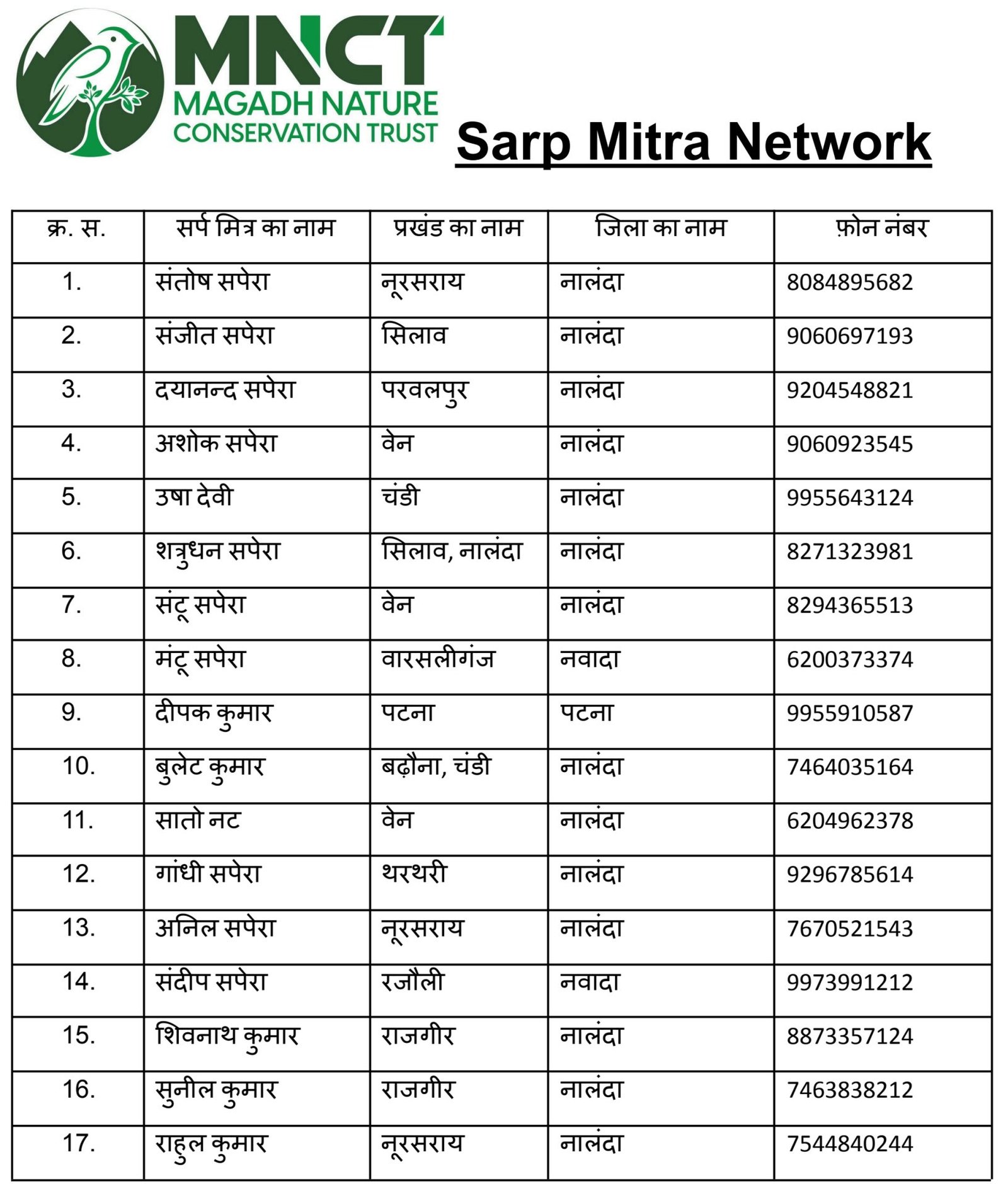
MNCT took the initiative to train local rescuers and equip them to undertake responsible snake rescue. The network was established in September 2025, with support and coordination involving the Nalanda Forest Division and Bihar Paryavaran Sanrakshan Abhiyan (BIPSA).
Today, 17 rescuers are working with MNCT as part of the Sarp Mitra network in Nalanda, Nawada and Patna. MNCT has provided 14 rescue kits across 10 blocks, along with training, awareness activities and coordination support.
Over the last year, the rescuers have saved more than 250 snakes. Behind this number are hundreds of encounters in which a frightened household, a farmer or another community member needed help dealing with a snake.
Every such call is also an opportunity to explain why the animal should not be killed and how people can stay safe without harming it.
Snakebite Is a Serious Public Health Concern
India accounts for a substantial share of the world's snakebite deaths. Research published in 2020 estimated around 58,000 snakebite deaths annually in India. The World Health Organization recognises snakebite envenoming as a major global public-health problem and a priority neglected tropical disease.
Agricultural workers and rural communities are particularly exposed because they spend long hours in fields and often live close to suitable snake habitats. Lack of awareness, unsafe attempts to catch snakes, delays in reaching hospitals and limited access to appropriate treatment—including antivenom in some healthcare settings—can make snakebites more dangerous.
MNCT has been organising snakebite prevention and awareness programmes in villages and schools across Nalanda. These activities help people understand snake behaviour, take precautions and respond correctly when a bite occurs.
Simple measures can reduce risk: use a torch when walking outside at night, wear appropriate footwear in fields, and avoid putting hands into dark spaces or piles of stored material without checking. If a snake is spotted, keep your distance and call a trained rescuer.
If someone is bitten, take them to a hospital immediately. Do not cut the wound, try to suck out venom or depend on traditional remedies. Timely medical treatment can save lives.
Snakes Have a Role in Our Fields
Snakes are not simply animals to be feared. Many species feed on rodents that destroy crops and stored grain, making them useful allies in agricultural landscapes. They also form part of the food chain and help maintain ecological balance.
Fear and confusion, however, often lead to the killing of snakes, including species that pose little or no danger to people. Other reptiles, such as monitor lizards, are also sometimes killed because they are wrongly believed to be venomous or aggressive.
The answer is not to encourage people to handle snakes themselves. It is to help them recognise the risks, keep their distance and seek assistance from trained rescuers.
The People Behind the Rescues Need Support Too
There is an important issue that often goes unnoticed. Sarp Mitras respond to calls, travel to rescue sites and put their training and equipment to use. Yet many local rescuers are not paid for their time or travel. People often expect them to carry out rescues for free, even when the work involves considerable effort and risk.
For a community-based rescue network to continue, the people doing this work need support. Training and equipment are important, but so are recognition, fair compensation and opportunities to earn a more stable livelihood.
Through the Sarp Mitra Initiative, MNCT is working to address these needs while encouraging traditional snake catchers to use their knowledge for wildlife protection. The aim is to make rescue work safer and more sustainable, while helping local communities become active partners in conservation.
If You Find a Snake in Nalanda, Please Call for Help
Do not try to kill, catch or handle the snake. Keep people and pets away, maintain a safe distance, and contact a trained Sarp Mitra or the Forest Department.
Please respect the rescuers' time and travel, and offer fair compensation for their service wherever possible.
This National Reptile Awareness Day, remember that protecting snakes and protecting people are not opposing goals. With awareness, timely medical care and trained local rescuers, many encounters can end safely for everyone.
The Sarp Mitra Initiative is MNCT's effort to make that possible in Nalanda—one rescue, one village and one informed response at a time.
Magadh Nature Conservation Trust (MNCT)
Working for the nature, with the people.